
Choosing the right custom software development firm can determine whether your next software project becomes a valuable business asset or an expensive mistake.
Many businesses reach a point where spreadsheets, disconnected tools, manual processes, or off-the-shelf software can no longer support their operations. They need a solution that fits their workflows, connects their systems, and supports future growth.
But finding the right development partner is not always easy.
Some firms promise unrealistic delivery timelines. Others provide unclear estimates, fail to understand business requirements, or deliver software that needs expensive fixes after launch. In some cases, clients even struggle to access their own source code or get support once the project is completed.
The challenge is not simply finding developers. It is finding a development partner who understands your business, communicates clearly, and can turn your requirements into reliable software.
So, how do you choose the right software development firm?
This article explains what to look for, which questions to ask, what warning signs to avoid, and how to evaluate a company before investing in custom software development.
When Does Your Business Need a Custom Software Development Firm?
Not every business needs custom software. Ready-made solutions can work well when your requirements are simple and your existing tools support your operations.
However, custom software becomes worth considering when standard products create more problems than they solve.
If your business is considering a new digital product, explore custom software development services for growing businesses to understand the types of applications and systems that can be built around specific workflows.
Here are some common situations where custom development may make sense.
1. Your Existing Software Cannot Support Your Workflow
Your business may have unique processes that generic software does not support. You might need specific approval systems, reporting features, user roles, or operational workflows.
Custom software allows you to build around the way your business actually operates instead of changing your processes to fit a generic product.
For example, a business with multiple departments may need a centralized platform that manages employee tasks, approvals, customer records, and internal reporting.
2. Your Team Depends Too Much on Spreadsheets and Manual Work
Managing customer information, employee tasks, inventory, appointments, or business records across multiple spreadsheets can create errors and waste time.
A custom business application can bring these operations into one centralized system.
For businesses that need sales and inventory management, a dedicated solution can be more practical than maintaining several disconnected spreadsheets. You can also explore PWH’s SmartBiz POS and inventory application as an example of a business-focused software product.
3. Your Business Uses Disconnected Tools
When your CRM, accounting software, website, inventory system, and other platforms do not communicate properly, employees may need to enter the same information multiple times.
Custom integrations can help connect these systems and reduce unnecessary manual work.
A development firm can evaluate your existing tools and identify whether API development, database integration, or a centralized business platform is the right approach.
4. Your Business Is Growing Beyond Its Current Tools
A solution that works for a small team may become difficult to manage as customers, employees, transactions, and operational requirements increase.
A properly planned custom application can be designed around your current needs and future business requirements.
For example, a growing company may eventually need a centralized employee platform with attendance, shift management, leave requests, reporting, and team communication. ShiftTick, PWH’s employee attendance and shift management product, demonstrates this type of business software application.
5. You Need Control Over Features and Product Direction
With ready-made software, you usually depend on the provider’s features, pricing plans, and product roadmap.
Custom development gives your business greater control over functionality, integrations, user experience, and future improvements.
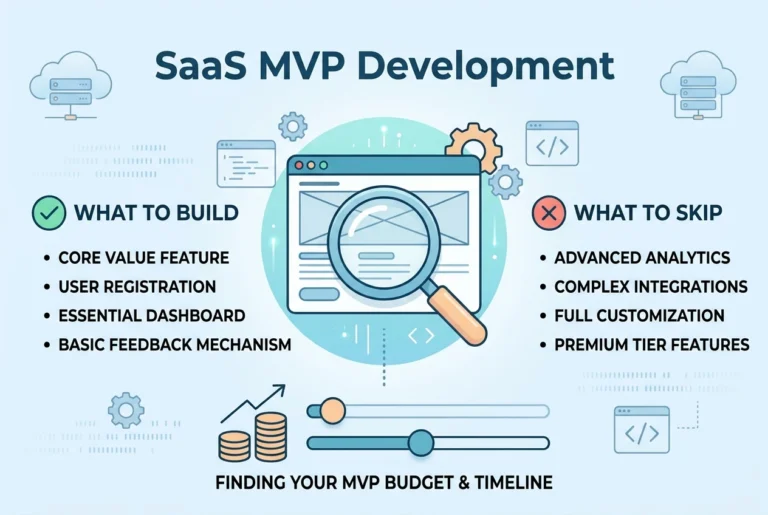
If you are planning a subscription-based product, you may also want to understand how SaaS MVP development works before committing to a complete platform.
What Should You Look for in a Custom Software Development Firm?
Before hiring a development company, evaluate more than its website, pricing, or list of technologies.
The following factors can help you identify a partner that understands your business requirements and can deliver a maintainable solution.
1. Relevant Project Experience and Portfolio
A development firm should be able to demonstrate experience with projects related to your requirements.
For example, if you need a business management platform, look for experience with dashboards, user permissions, reporting, workflow management, and integrations.
Ask potential firms:
- Have you developed a similar application before?
- Can I see live applications or relevant portfolio examples?
- What challenges did you face during development?
- Which features did your team build?
- Can you explain your role in the project?
Do not evaluate a company only by attractive screenshots. Look for evidence of working products, relevant functionality, and the team’s actual contribution.
Before making a decision, review the company’s software development portfolio and completed projects to understand the type of work it has delivered.
You can also learn more about PWH Services and its development team.
2. Understanding of Your Business Requirements
A reliable custom software development firm should understand the problem before recommending a technical solution.
If a company provides a price without asking about your users, workflows, integrations, and expected outcomes, its estimate may not reflect the actual project.
A good development partner should discuss:
- Your business goals.
- The problems you want to solve.
- Who will use the software.
- Essential features and user roles.
- Existing systems that need integration.
- Expected launch timeline.
- Future development requirements.
The goal is to turn your business requirements into a realistic development plan.
If you are still at the idea stage, read I Have an App Idea, Where Do I Start? for practical steps to validate an idea and prepare for development.
For startup founders, understanding what an MVP means in app development can also help prevent unnecessary features from increasing the initial project scope.
3. Clear Pricing and Project Scope
Unclear pricing is one of the biggest concerns when hiring a software development company.
A low initial quote may look attractive, but unexpected expenses can appear when essential features, integrations, testing, or revisions are excluded.
Before signing an agreement, request a proposal that explains:
- Included features and deliverables.
- Project milestones.
- Estimated development timeline.
- Payment schedule.
- Third-party service or licensing costs.
- How additional requirements will be priced.
- Testing and deployment responsibilities.
Compare proposals based on their scope and deliverables, not just the final price.
One common problem is scope creep: new features keep getting added without adjusting the budget or delivery timeline. Atlassian’s explanation of project scope creep explains why clear deliverables and change management matter.
You should also estimate the investment required before starting development. Our article on MVP development cost and the factors that affect pricing can help startup founders understand how features and project complexity influence development costs.
For a more detailed look at how PWH approaches software projects, explore our custom software development services and project process.
4. Communication and Project Transparency
Poor communication can create confusion, delays, and unnecessary revisions.
You should know who manages your project, how progress is shared, and how quickly your questions will be answered.
Ask the development firm:
- Will I have a dedicated project contact?
- How frequently will I receive updates?
- Can I review working features during development?
- How are changes and feedback managed?
- How will delays or technical issues be communicated?
Look for a team that shares progress regularly instead of disappearing for weeks and presenting everything at the end.
For example, PWH’s development approach includes discovery and planning, UI/UX design, development, testing, and launch support. You can see the process across our digital development services.
5. Technology Expertise and Scalability
The technology stack should match your product requirements, performance needs, budget, and long-term plans.
A development firm should explain why its proposed technologies are suitable rather than simply listing popular programming languages and frameworks.
Depending on your project, you may need:
- Web application development.
- Android and iOS mobile app development.
- Cloud-based infrastructure.
- Database design and management.
- API development and integrations.
- AI features and intelligent workflows.
- Admin dashboards and reporting systems.
If your project requires a customer-facing mobile application, explore PWH’s mobile app development services.
For businesses that need both websites and applications, PWH’s app solutions provide more information about its mobile product development capabilities.
If you are comparing cross-platform and native app development, our related article on Flutter vs. Native development for startups is available through the PWH blog section.
Ask how the proposed architecture will support future users, additional features, integrations, and maintenance.
6. Software Testing, Security, and Quality Assurance
A software application can look impressive during a demonstration but still contain errors that affect real users.
Without proper testing, businesses may experience crashes, incorrect data, broken workflows, performance issues, or security weaknesses after launch.
Ask the development team about:
- Functional and usability testing.
- Cross-device and browser testing.
- Performance testing where appropriate.
- Access controls and user permissions.
- Data protection and backup practices.
- Bug tracking and issue resolution.
- Testing before production deployment.
Security should be considered throughout the development process, not added as an afterthought.
The OWASP Top 10:2025 provides a useful overview of common web application security risks, including broken access control, security misconfiguration, and authentication failures.
A reliable development partner should be able to explain how security and quality assurance are considered in the architecture, implementation, and testing stages.
7. Source Code Ownership and Post-Launch Support
One of the most important questions is what happens after your software is delivered.
Your agreement should clearly explain ownership and access to source code, repositories, project assets, data, and relevant accounts. It should also define any third-party licenses or components that have separate terms.
You should also clarify:
- Is documentation included?
- Who manages deployment?
- Are bug fixes included after launch?
- What support plans are available?
- How are future updates handled?
- Can another development team maintain the application if needed?
A reliable partner should make the handover and support arrangements clear before development begins.
For example, PWH’s custom software development service explains its approach to code ownership, documentation, milestone payments, and post-launch support.
Custom Software Development Firm Evaluation Checklist
Use this checklist when comparing different software development companies.
| Evaluation factor | What to verify |
|---|---|
| Portfolio | Relevant, working project examples |
| Requirements | Clear understanding of your business problem |
| Pricing | Written scope, milestones, and payment terms |
| Communication | Regular updates and an accountable contact |
| Technology | Suitable stack and technical approach |
| Quality assurance | Testing and bug-fixing process |
| Security | Data protection and access controls |
| Ownership | Source code, accounts, and IP terms |
| Support | Maintenance and post-launch assistance |
You can use the same checklist for every shortlisted company. This makes it easier to compare proposals objectively instead of choosing based on sales promises alone.
When comparing potential providers, you can also review software development companies on Clutch and Gartner Peer Insights’ custom software development services reviews.
Use these directories as research starting points. Verify each firm’s actual project experience, references, proposal, and contract terms independently.
Red Flags to Avoid When Hiring a Software Development Firm
A development company’s promises may sound convincing, but certain warning signs deserve extra attention.
Unrealistic delivery promises: A firm that promises a complex application in an unusually short period without understanding the requirements may be underestimating the work.
Very low quotes without a clear scope: An attractive price is not useful if essential features, testing, or deployment are excluded.
No relevant portfolio: If a company cannot show comparable work or explain its experience, you may have difficulty evaluating its capabilities.
Poor communication before the project starts: If the team is difficult to reach during the sales process, communication may become even harder during development.
No written ownership terms: Unclear source code and intellectual property arrangements can create problems when you want to change providers.
No post-launch plan: Software requires updates, bug fixes, monitoring, and improvements. Confirm who will handle these responsibilities.
How Much Does It Cost to Hire a Custom Software Development Firm?
There is no single price for custom software development because each project has different requirements.
A basic internal business application may require a different investment from a multi-user SaaS platform, a complex enterprise system, or a mobile application connected to several external services.
The final cost usually depends on:
- Number and complexity of features.
- Web, Android, and iOS platform requirements.
- UI/UX design and user experience.
- Backend architecture and database requirements.
- Third-party API integrations.
- Security and compliance requirements.
- Testing, deployment, and maintenance.
The best way to compare costs is to request a detailed proposal based on your actual requirements.
Avoid choosing a development firm only because it offers the lowest quote. Consider the expected quality, delivery approach, ownership terms, and long-term maintenance costs as well.
If you are planning a startup product, you may find our SaaS MVP development article useful for understanding what to build first and what can wait until later.
Questions to Ask Before Hiring a Custom Software Development Firm
Before making your final decision, ask these questions during your initial consultation:
- Have you developed software similar to my business requirements?
- Can I review relevant projects in your portfolio?
- Who will work on my project?
- How will you understand and document my requirements?
- What development approach and technology stack do you recommend?
- How will you share progress and manage revisions?
- What testing and quality assurance processes do you follow?
- Who will own the source code and project assets?
- What happens if I need additional features?
- What support will be available after launch?
The answers will help you understand whether a firm has a structured process and whether its approach fits your business.
Why Consider PWH Services for Your Custom Software Project?
If your business needs software that fits its workflows rather than forcing employees to adapt to generic tools, working with a development team that understands your requirements is important.
At PWH Services, we build digital solutions around business and product requirements, including custom software, web applications, and mobile applications.
Our custom software development services cover solutions such as:
- SaaS product development.
- Custom CRM development.
- ERP and inventory management software.
- Desktop application development.
- API development and integration.
- Database design and development.
- Cloud and DevOps.
- Legacy software modernization.
A Clear Development Process
1. Discover and Define
We discuss your goals, users, business requirements, and essential features. Based on the project details, we prepare a scope, timeline, and quote.
2. Design and Prototype
We create user-focused designs and prototypes so you can review the experience before development moves forward.
If user experience is an important part of your project, you can also explore our UI/UX and digital design services.
3. Develop and Integrate
Our team builds the application and works on the required functionality, integrations, and technical components, with regular progress updates.
4. Test, Launch, and Support
We test the solution, prepare it for launch, and provide ongoing support and improvements.
You can explore our portfolio and project examples or learn more about our products built and supported by the PWH team.
Have a Software Project in Mind?
Whether you need an internal business application, a customer-facing platform, a SaaS product, or a mobile application, the first step is understanding what you want to build and why.
Contact PWH Services to discuss your requirements and request a project estimate.
You can also explore our complete range of software, app, web, and design services to find the right starting point.
Ready to discuss your software project? Contact PWH Services to explain your requirements and explore the right development approach.
Frequently asked questions
A custom software development firm plans, designs, builds, tests, and maintains software based on a client's specific business requirements. Its work may include web applications, mobile apps, business management platforms, SaaS products, integrations, and internal systems.
Compare firms based on relevant experience, portfolio, technical expertise, project scope, pricing transparency, communication, testing practices, source code ownership, and post-launch support. Request a written proposal before making your decision.
Custom software can be a better choice when your business has specific workflows, integration requirements, or functionality that existing products cannot support. Ready-made software may be more practical when your needs are standard and its features are sufficient.
The cost depends on project complexity, features, platforms, integrations, design, security, and maintenance requirements. A development firm should review your requirements before providing a meaningful estimate.
Development time varies according to the application's scope and complexity. A small application may take less time than a large platform with multiple user roles, integrations, and advanced functionality. A written project plan should outline the expected milestones.
Written by the PWH Services team, who design and build mobile apps, websites and AI products for startups and growing businesses.