Telemedicine is transforming the way healthcare is delivered. Waiting rooms are quieter, appointments are faster, and patients can now connect with doctors from home, the office, or even while traveling. In 2026, telemedicine is no longer a temporary solution or a pandemic trend—it has become a core part of healthcare, allowing providers to deliver care faster while giving patients more control over their health. From virtual consultations to remote monitoring and mental health support, digital care is reshaping the healthcare experience.
Healthcare organizations are increasingly partnering with experts in healthcare app development to build secure, reliable, and easy-to-use telemedicine platforms.
This guide breaks down what is telemedicine, the types available, its benefits, and how telemedicine works in real-world practice.
What Is Telemedicine?
At its core, telemedicine refers to delivering clinical healthcare services remotely using digital tools. Instead of visiting a clinic, patients connect with doctors through video calls, phone consultations, secure messaging, or mobile apps.
Telemedicine allows medical professionals to:
Diagnose conditions
Prescribe medications
Monitor ongoing treatments
Provide follow-up care
Today, telemedicine services span multiple specialties, including primary care, dermatology, mental health, chronic disease management, and post-surgery follow-ups. The goal isn’t to replace traditional care but to make healthcare more accessible, flexible, and efficient.
How Telemedicine Works in 2026
The process of how telemedicine works is simple, user-friendly, and designed to feel familiar:
The patient books an appointment through a website or mobile app.
Medical history and symptoms are submitted digitally.
The consultation occurs via secure video or phone.
The provider shares a diagnosis, treatment plan, or prescription.
Follow-ups or remote monitoring continue if needed.
Modern telemedicine platforms integrate wearable devices, AI symptom screening, and automated reminders, making care faster and more proactive. Organizations building these systems often follow frameworks like how to create a medical app or specialized telemedicine guides to ensure usability, compliance, and security.
Types of Telemedicine
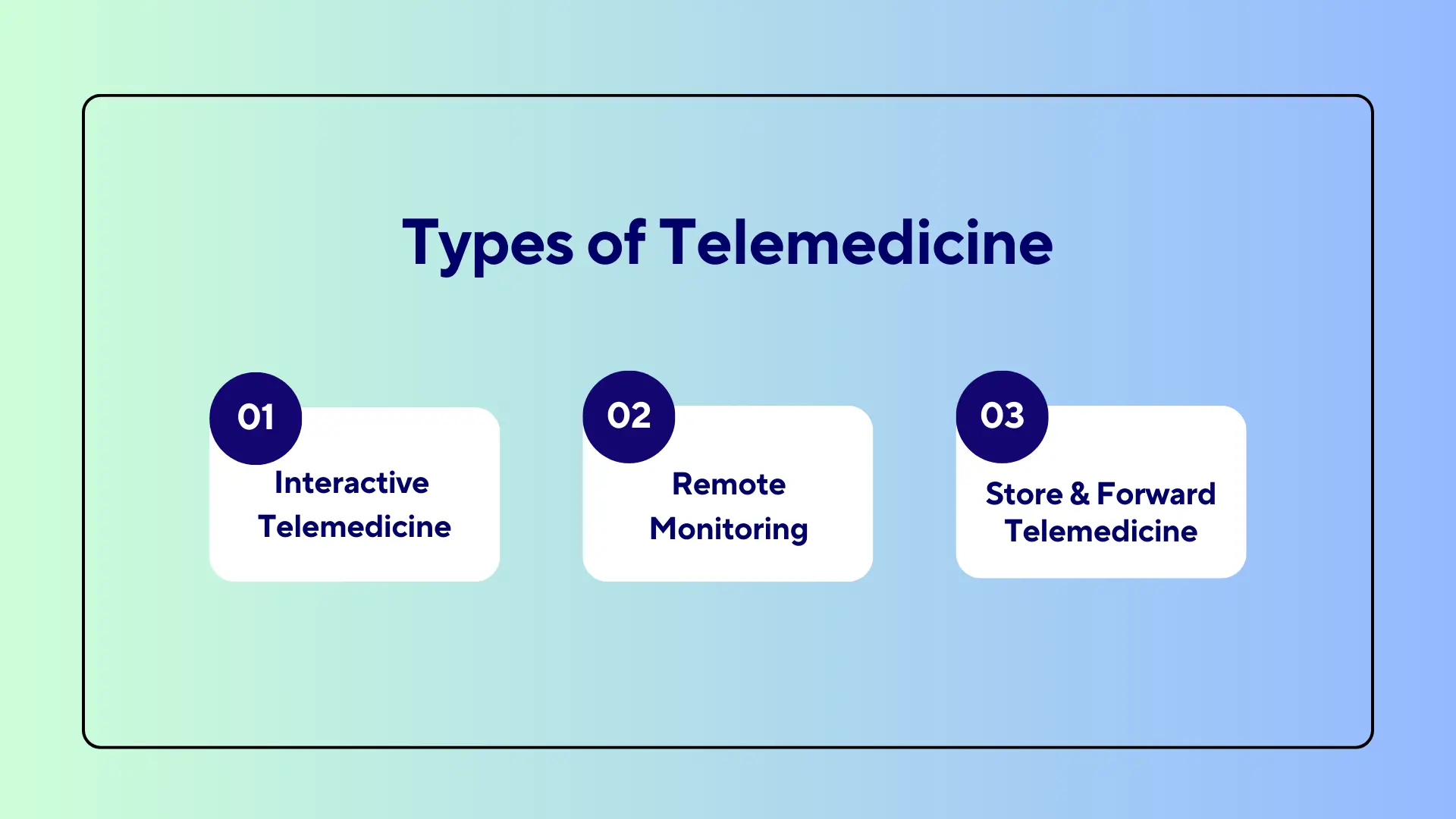
Understanding what is telemedicine also means knowing the formats it takes in modern healthcare:
1. Live Video Consultations
Patients speak with doctors in real-time. Used for general checkups, minor illnesses, and specialist consultations.
2. Store-and-Forward
Patients send medical data, images, or reports for review later. Common in dermatology, radiology, and pathology.
3. Remote Patient Monitoring
Devices track vital signs like blood pressure, heart rate, or glucose levels and share them with providers. Essential for chronic disease management.
4. Mobile Health (mHealth)
Health apps provide reminders, symptom tracking, and wellness support. Mental health platforms are growing rapidly, showing how telemedicine supports both preventive and ongoing care.
Benefits of Telemedicine
As more patients understand what is telemedicine, its advantages are clear:
Convenience: Avoid travel, long waits, and time off work.
Better Access: Rural and underserved populations can reach specialists easily.
Faster Care: Appointments are often available sooner.
Cost Savings: Reduced transportation and fewer emergency visits lower overall healthcare expenses.
Ongoing Monitoring: Remote tracking helps doctors manage chronic conditions more effectively.
Real-World Use Cases
Telemedicine improves outcomes across many areas:
Mental health therapy and counseling
Dermatology and skin evaluations
Medication management
Post-surgery follow-ups
Chronic disease monitoring
Women’s and men’s health consultations
Platforms built by healthcare innovators, like Kinekt, nurse practitioners, and Libido Health, demonstrate measurable results in patient engagement and outcomes.
Security and Compliance in Telemedicine
One major concern when exploring what is telemedicine is data safety. Healthcare platforms must protect sensitive patient information using:
Encryption
Secure authentication
Regulatory compliance
Following strict standards ensures trust and reliability in telemedicine in healthcare. Developers rely on best practices like medical data encryption and HIPAA compliance to protect patient information.
The Future of Telemedicine
Telemedicine will continue evolving with:
AI-assisted diagnosis
Wearable device integration
Virtual health assistants
Predictive analytics
Personalized treatment plans
Healthcare organizations are investing in scalable digital ecosystems, guided by insights on healthcare solutions and emerging digital trends.
Why Telemedicine Matters More Than Ever
Telemedicine represents a shift in care delivery. Patients expect flexibility. Providers need efficiency. Healthcare systems must scale without losing quality. Understanding how telemedicine is used helps both patients and organizations make smarter decisions about digital care.
Conclusion
In 2026, what is telemedicine is more than virtual appointments—it reflects a smarter, more connected healthcare experience. From routine consultations to chronic condition management, telemedicine makes care easier to access, faster to deliver, and more patient-focused than ever before.
While in-person visits remain essential for certain situations, the future lies in a hybrid model where digital and traditional care work together. Secure platforms, intuitive apps, and scalable systems make remote care feel natural. Telemedicine isn’t just the future—it’s already here, transforming how healthcare works for everyone.