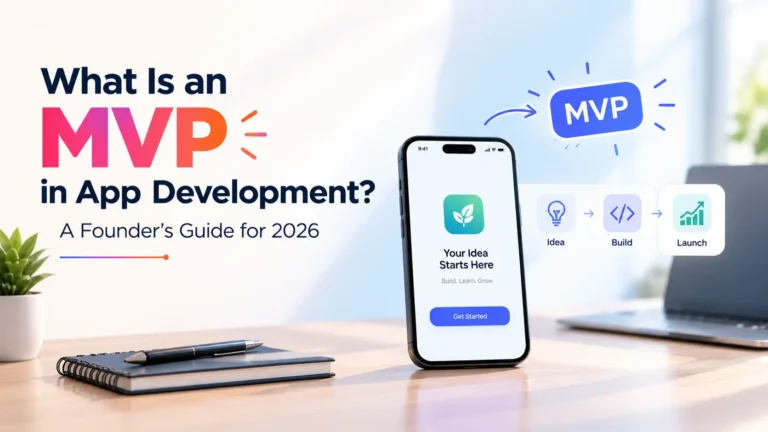
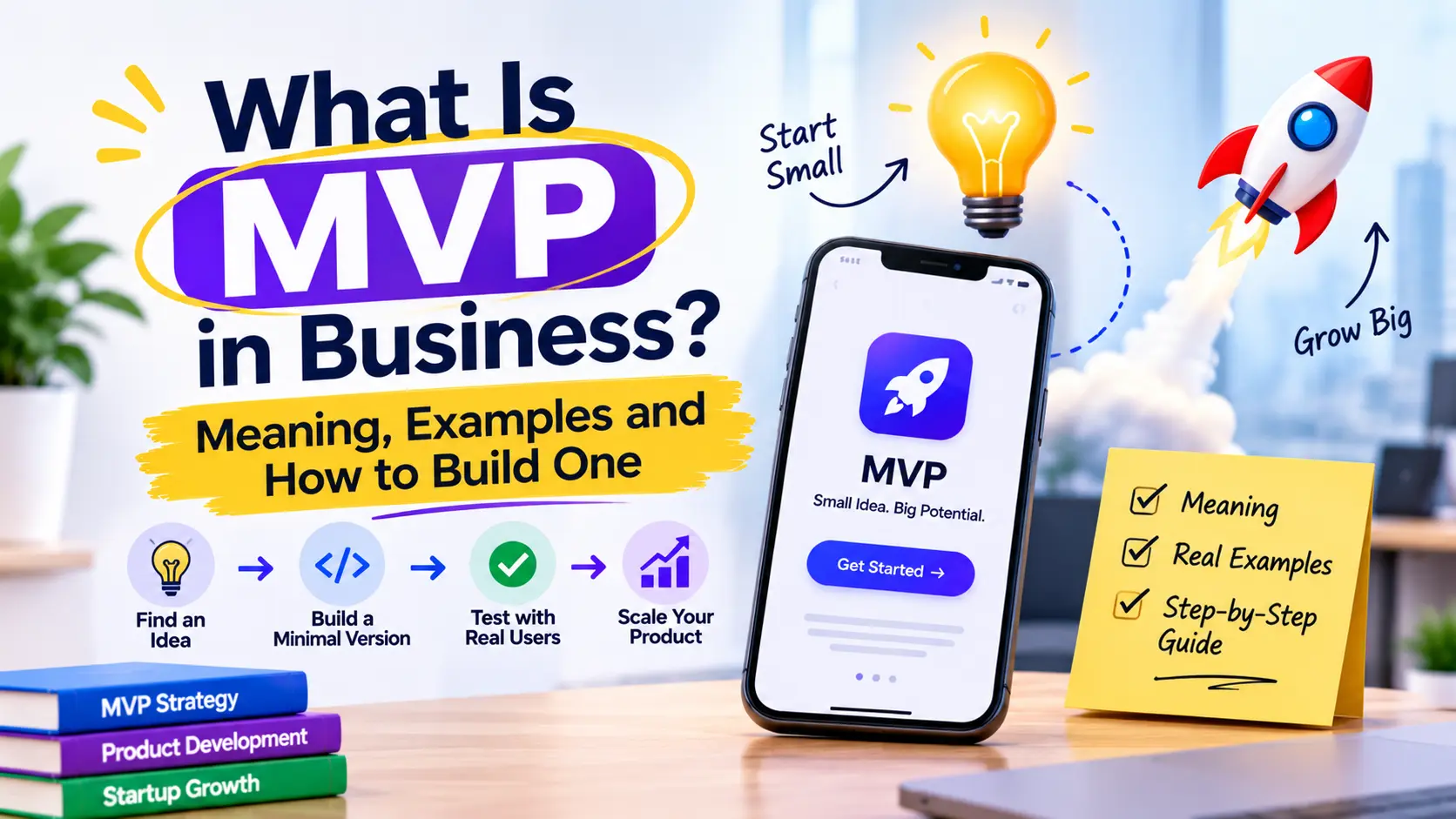
MVP stands for minimum viable product. In business, an MVP is the simplest version of a product or service that real customers can use, so you can learn whether people want it before you spend months and a large budget building the full thing. This guide explains what an MVP means in business, shows famous examples, and walks you through building one.
What Does MVP Mean in Business?
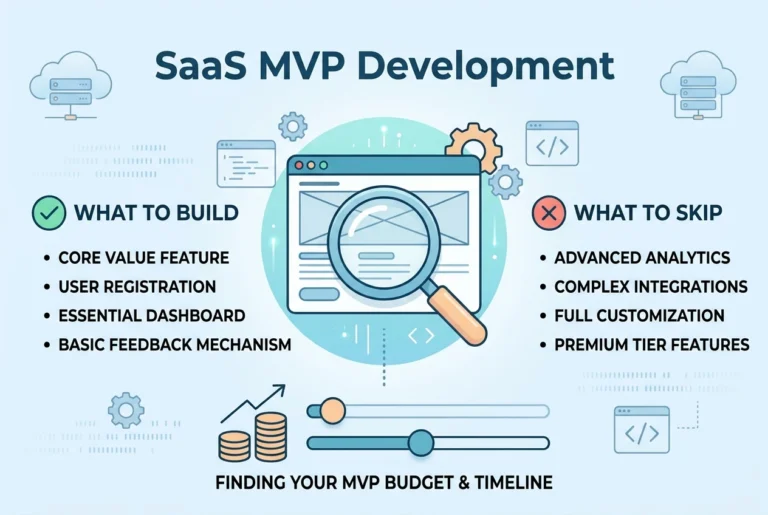
In business, an MVP is the smallest offer that delivers real value to early customers and gives you useful feedback. It is not a half-finished product. It is a focused one: it solves one main problem well, and nothing more.
The idea became popular through the Lean Startup approach popularized by Eric Ries, which encourages teams to build, measure and learn in short cycles instead of guessing what customers want.
Key Characteristics of an MVP
- Solves one main problem: it focuses on the single job customers care about most.
- Usable by real customers: it works well enough that people can use it and, ideally, pay for it.
- Built to learn: every MVP starts with a clear question, such as whether customers will sign up or buy.
- Measurable: you decide in advance which numbers will tell you if it worked.
- Easy to change: it is designed to be improved quickly based on feedback.
Why MVPs Matter for a Business
- Lower risk: you test demand with a small investment before committing to a full build.
- Faster learning: real customer behavior tells you more than surveys or opinions.
- Earlier revenue: a good MVP can start earning while you improve it.
- Easier fundraising: investors trust traction from real users more than a slide deck.
MVP vs Prototype vs Proof of Concept
| Proof of concept | Prototype | MVP | |
|---|---|---|---|
| Question it answers | Can this be built? | Does the flow make sense? | Will people use and pay for it? |
| Who uses it | Your team | Your team and test users | Real early customers |
| Working product | Partial | Usually clickable designs | Yes, production quality |
Famous MVP Examples in Business
Dropbox
Before building the full product, Dropbox shared a short demo video showing how file syncing would work. The strong sign-up response proved demand before heavy engineering began.
Airbnb
The founders started by renting air mattresses in their own apartment to conference visitors, using a simple website. It showed that people would pay to stay in a stranger’s home.
Zappos
The founder tested online shoe sales by posting photos of shoes from local stores and buying them only after a customer ordered. It proved people would buy shoes online before building inventory.
Amazon
Amazon began as an online bookstore. Starting with one product category let the company prove that people would buy online before it expanded into almost everything else.
MVP Examples for Non-Tech Businesses
An MVP is not only for apps. Any business can test an idea before investing fully.
- A cafe: adds a new dish as a weekend special before putting it on the permanent menu.
- A coaching business: pre-sells a live workshop before recording a full online course.
- An online store: takes pre-orders for a new product before ordering stock.
- A service company: offers a new service to a few existing clients before marketing it widely.
Advantages and Disadvantages of an MVP
| Advantages | Disadvantages |
|---|---|
| Tests demand before a large investment | A product that is too basic can give a poor first impression |
| Gets you to market and to feedback faster | Competitors may see and copy your idea early |
| Uses real behavior instead of guesses | Early users may not represent your full market |
| Can bring early revenue and traction for investors | Requires discipline to say no to extra features |
How to Measure If Your MVP Worked
Decide your success numbers before launch, so the results guide your next step instead of your opinions.
- Sign-ups or sales: how many people try or buy it.
- Activation: how many complete the main action, such as making a first booking.
- Retention: how many come back after a week or a month.
- Willingness to pay: whether people pay, pre-order or ask about pricing.
- Qualitative feedback: what users say they love, miss or find confusing.
If the numbers are strong, invest in the next version. If they are weak, change the offer, the audience or the problem before spending more.
MVP vs Beta Version
An MVP and a beta are often confused. An MVP tests whether the idea itself has demand, so it is the smallest useful version. A beta is a near-complete product released to a limited group to find bugs and polish the experience before a full launch. Many products go from MVP, to improved versions, to a beta, and then to public launch.
Types of MVPs
- Landing page MVP: a page that explains the offer and collects sign-ups or pre-orders.
- Concierge MVP: you deliver the service manually to the first customers.
- Wizard of Oz MVP: customers see a working product, while parts of it are handled manually behind the scenes.
- Single-feature MVP: a real app or tool that does one core job well.
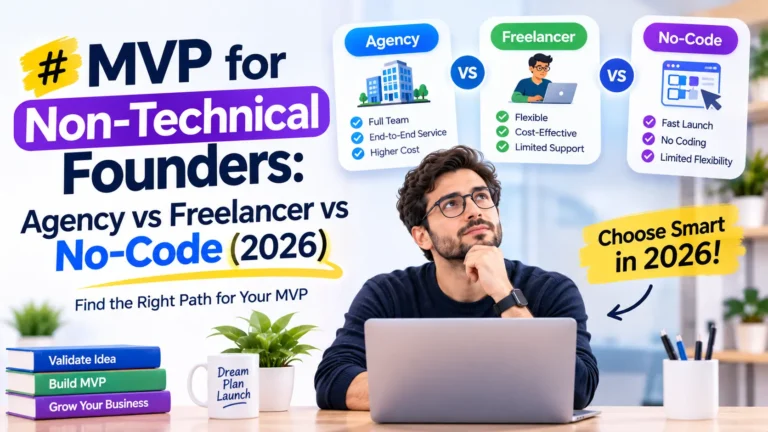
- No-code MVP: a working product built quickly with no-code or AI tools to test demand.
How to Build an MVP for Your Business
- Define the problem: write down the one problem your customers pay to solve.
- Pick your first customers: choose a narrow group you can reach easily.
- Map one core user journey: the path a customer takes to get the main value.
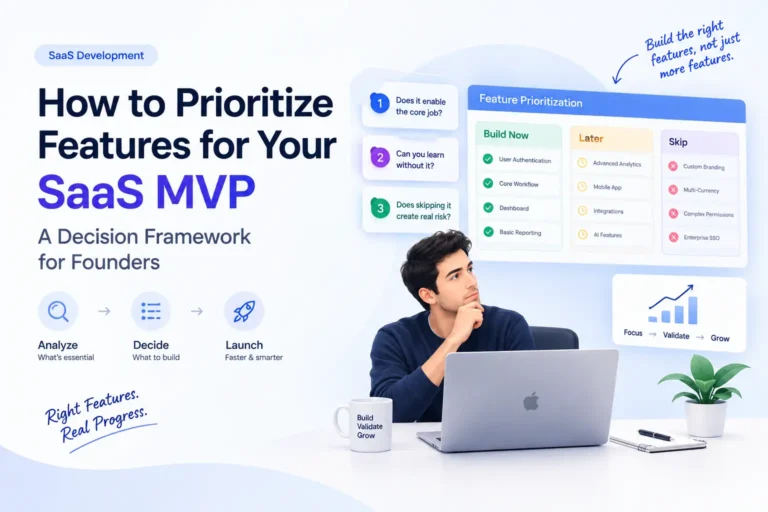
- Cut everything else: move nice-to-have features to version two.
- Choose the fastest way to build: landing page, no-code tool or custom app, depending on what you need to test.
- Launch and measure: track sign-ups, usage, retention and willingness to pay.
- Learn and improve: use real feedback to decide what to build next.
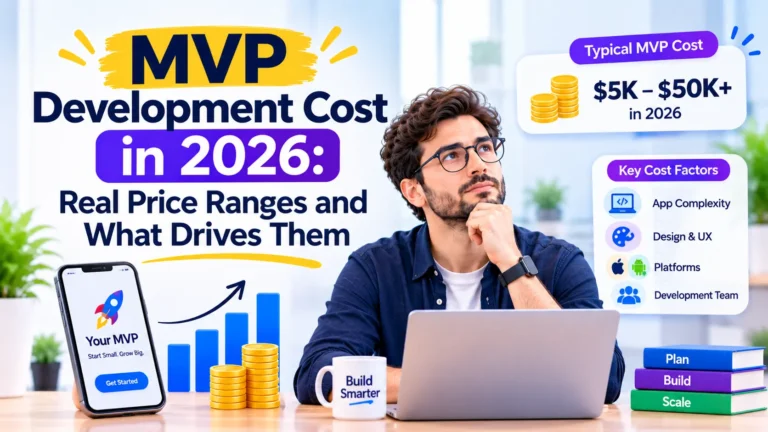
For software products, see what an MVP in app development should include and how much an MVP costs.
Common MVP Mistakes
- Building too much: adding twenty features when customers only need one.
- Building too little: launching something so rough that it does not solve the problem.
- Not measuring: launching without clear goals for sign-ups, usage or revenue.
- Ignoring feedback: sticking to the original plan when customers show a different need.
Need Help Building Your MVP?
PWH Services helps founders turn ideas into working first versions for iOS, Android and the web. You get a fixed quote within 24 hours, milestones you approve before you pay and full ownership of your code. Explore our MVP development services or book a free 30-minute call.
Frequently asked questions
An MVP, or minimum viable product, is the simplest version of a product or service that real customers can use, built to test demand and learn before investing in the full product
Dropbox tested demand with a demo video, and Airbnb started by renting air mattresses through a simple website. Both proved customers wanted the idea before a full build.
No. A prototype tests whether a flow makes sense, usually with designs. An MVP is a working product that real customers use, so it tests whether they will use and pay for it.
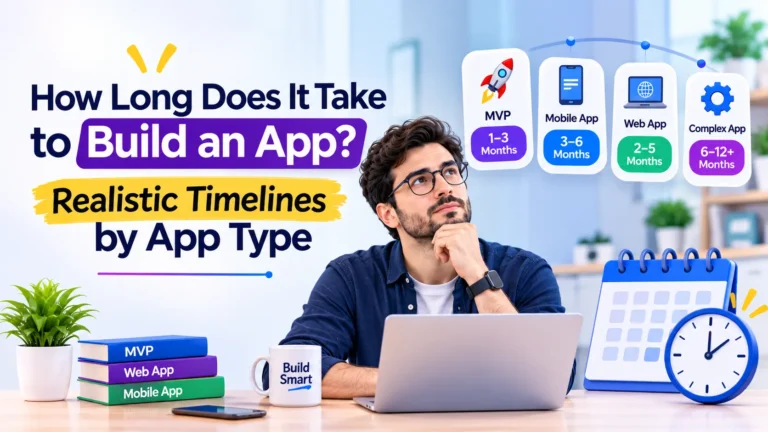
A simple landing page MVP can take days. A software MVP usually takes 8 to 16 weeks.
Set clear goals before launch, such as sign-ups, activation, retention or paying customers, and compare the results against them.
Written by the PWH Services team, who design and build mobile apps, websites and AI products for startups and growing businesses.