
Many products don’t fail because the idea is bad. They fail because the team spent too much time and money building the wrong thing first.
That’s why a minimum viable product is still the most practical way to launch something new. But the MVP development trends 2026 brought are changing how founders plan, build, and validate that first version. AI-native products, agentic coding tools, capable low-code platforms, and stricter privacy expectations all affect what a smart first release looks like. This guide from PWH Services explains the trends that matter, and how to use them to reduce risk and reach product-market fit faster.
In this guide:
- The Short Answer
- What an MVP means in 2026
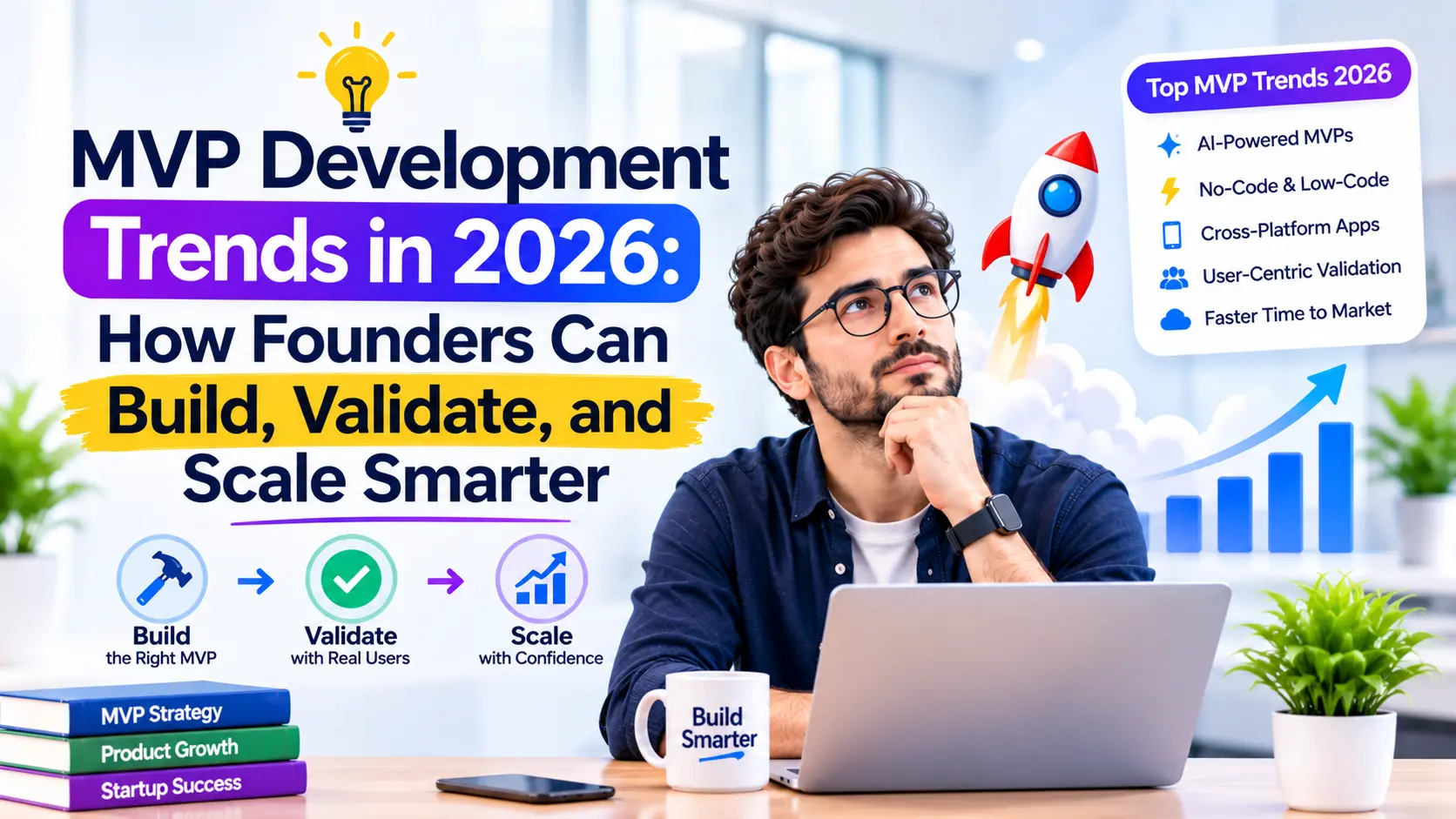
- 10 MVP development trends at a glance
- The trends explained
- How to choose the right MVP development approach
- A practical roadmap: how to build an MVP
- Common mistakes to avoid
- How much MVP development costs
- FAQs
The Short Answer
The biggest MVP development trends in 2026 are AI-native products, agentic software development, smaller and more focused first releases, more capable low-code platforms, modular API-first architecture, and privacy built in from day one. The common thread is speed with discipline: AI and new tools help teams build faster, but successful MVPs still depend on a clear customer problem, a narrow scope, solid engineering review, and measurable validation goals.
What an MVP Means in 2026
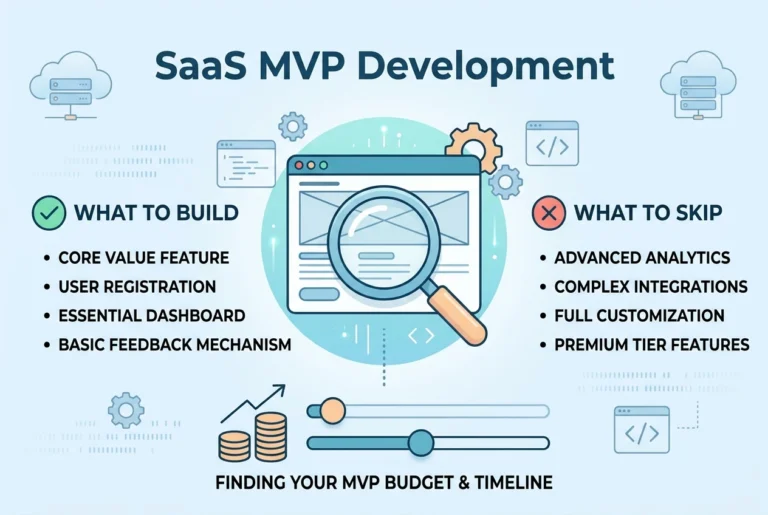
A minimum viable product is the smallest usable version of a product that can test a specific business assumption with real users. It isn’t a cheap final product, a pile of unfinished features, or a throwaway demo.
A strong MVP should:
- Solve one clearly defined customer problem
- Deliver enough value that people actually try it
- Collect meaningful usage and feedback data
- Support a clear business decision
- Provide a foundation for future development
For example, a logistics startup doesn’t need a full fleet management platform on day one. It might start with driver onboarding, shipment tracking, and customer notifications. If you’re new to the concept, our guide on what an MVP is in app development covers the basics.
10 MVP Development Trends at a Glance
| Trend | What it means for founders |
|---|---|
| 1. AI-native MVPs | AI is the core value, not an add-on chatbot |
| 2. Agentic software development | AI tools plan, write, and test code, but still need expert review |
| 3. Smaller, more focused MVPs | Build toward one “value moment,” not a feature list |
| 4. Low-code beyond prototypes | Faster validation for simple workflows, with limits |
| 5. API-first, modular architecture | Lean today, easy to upgrade tomorrow |
| 6. Privacy and security by design | Even an MVP must protect user data |
| 7. Multimodal interfaces | Voice, images, and documents open new product ideas |
| 8. Personalization as a baseline | Users expect apps that adapt to them |
| 9. Continuous discovery | Launch is the start of learning, not the finish |
| 10. Cloud-native cost awareness | Scale smoothly without runaway usage costs |
The Trends Explained
1. AI-Native MVPs Are Becoming a Major Product Category
An AI-native MVP is designed around artificial intelligence from the start. Examples include AI support platforms, document processing tools, sales assistants, and decision-support products. AI-native product development isn’t about adding a chatbot. It’s about making AI part of the core value.
A serious AI MVP development plan should define the user problem, the data needed, the accuracy the product must reach, the cost per interaction, when a human reviews the output, and what happens when the AI is wrong. For most founders, the best start is an existing hosted model connected to carefully chosen business data, not training a custom model.
Before building, set a measurable success threshold, such as “users complete the task 30 percent faster” or “the cost per user stays below a set amount.” Without one, an AI MVP easily becomes an expensive demo. Our AI integration and automation services help teams plan this step.
2. Agentic Software Development Is Changing How MVPs Are Built
AI is changing not only what gets built, but how. Agentic coding tools can turn requirements into tasks, generate components, write tests, and draft documentation. McKinsey added agentic software development as a new trend in its Technology Trends Outlook 2026, and also reported that productivity fell in about 30 percent of companies that adopted agentic AI tools without a systematic approach.
That’s the key lesson for founders: these tools speed up rapid product development, but AI-generated code still needs architecture review, security testing, and human approval. If you’ve already built something with AI and want to launch it properly, see our guide on taking an AI-generated mobile app to production.
3. The Best MVPs Are Smaller and More Focused
Feature bloat delays launch, confuses users, and makes it hard to tell which feature actually created value. In 2026, smart teams build toward one “value moment,” the point where a user first gets the main benefit: completing a booking, receiving a useful insight, or finishing a task faster.
A focused MVP may have only three or four core workflows. That’s a strength, not a weakness, because it lets you learn faster.
4. Low-Code and No-Code Are Moving Beyond Simple Prototypes
Low-code tools now work well for internal tools, portals, dashboards, and early demand tests. They fit when the workflow is simple, speed is the priority, and the product relies on existing integrations. Custom software MVP development is usually the better choice for real-time features, complex permissions, strict compliance, or highly customized experiences.
Our comparison of no-code AI app builders explains where each tool fits, and if you’ve outgrown one, see when to migrate from Bubble.
5. API-First and Modular Architecture Are Becoming Essential
An MVP should be lean, not careless. Separating parts like login, payments, notifications, AI services, and reporting lets you upgrade one piece without rebuilding everything. You might start with a hosted payment provider and an external AI model, then replace them with custom services later. The goal is to avoid technical debt, not to over-engineer.
6. Privacy and Security Must Be Designed In
Even an early product may handle customer records, payments, or business documents. Secure login, role-based access, encrypted connections, safe handling of API keys, backups, and clear data retention rules belong in version one. AI products need extra care: know what data goes to external AI providers, mask sensitive information, and decide when a human should review outputs. A cheap MVP that leaks customer data costs far more than a careful build.
7. Multimodal Interfaces Are Creating New Opportunities
Products can now work with voice, images, documents, and video, not just text and forms. A field-service app could accept voice reports, or a property tool could analyze photos. The test is simple: does the new interface make an important task faster or easier? If not, it’s a distraction.
8. Personalization Is Becoming a Baseline Expectation
Users expect apps to adapt to them. For an MVP, start small: saved preferences, role-based dashboards, recently used actions, or personalized reminders. You don’t need a complex recommendation engine to make the product feel relevant.
9. Continuous Discovery Is Replacing the One-Time Launch
Launch is the beginning of learning. Track activation, feature usage, retention, conversion, and drop-off points, and combine them with customer interviews and support conversations. Decide before launch what result means “keep going,” “change direction,” or “stop.”
10. Cloud-Native Infrastructure Needs Cost Awareness
Managed hosting, databases, monitoring, and deployment pipelines help MVPs scale smoothly. But AI APIs, storage, and traffic create variable costs. A product can succeed technically and still fail financially if every active user costs too much to serve. Add cost alerts and monitoring from the start.
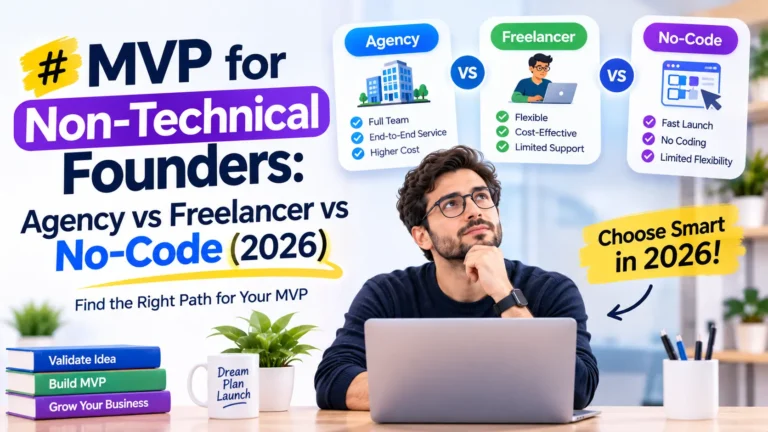
How to Choose the Right MVP Development Approach
| Approach | Choose it when | Watch out for |
|---|---|---|
| Low-code or no-code | The workflow is simple and speed matters most | Platform limits as you grow |
| Custom development | Workflows are complex, or compliance and control matter | Higher upfront cost |
| AI-assisted development | You want faster delivery with expert review | Unreviewed AI code creates risk |
| Hybrid | Some parts can be validated quickly, core features need custom code | Needs clear planning of what goes where |
For mobile products, our mobile app development services cover MVP app development for iOS and Android. For subscription software, see what a SaaS development company should provide.
Not sure which approach fits your idea? Tell us what you want to build, and we’ll recommend the most cost-effective app development path, with an itemized fixed quote within 24 hours. Get a free MVP scope review.
A Practical Roadmap: How to Build an MVP
- Define the business hypothesis. “Small logistics companies will pay for automated delivery updates” is useful. “We want to build a logistics app” isn’t.
- Identify the first user group. Industry, company size, role, current tools, and main pain point.
- Map the core user journey. Only the steps needed to reach the main result. Good UI/UX design at this stage saves weeks later.
- Choose the technology approach. Low-code, custom, AI-assisted, or hybrid, based on risk, speed, and future needs.
- Build a measurable first version. Set success metrics before launch, such as activated users, completed workflows, or paid conversions.
- Launch to a small, relevant audience. Easier to observe, fix, and learn.
- Improve based on evidence. Look for patterns across users, not the loudest request.
If you’re at the very first step, our guide for founders who think I have an app idea, where do I start? walks through it.
Common Mistakes to Avoid
- Building too many features. More features usually delay learning.
- Treating the MVP as a cheap final product. Focused doesn’t mean low quality.
- Ignoring security. Customer trust is hard to rebuild.
- Using AI without a business case. AI should improve a real outcome, not just the marketing.
- Choosing technology before defining the problem. The stack should serve the hypothesis.
- Assuming launch equals validation. Validation comes from measurable customer behavior.
How Much Does MVP Development Cost?
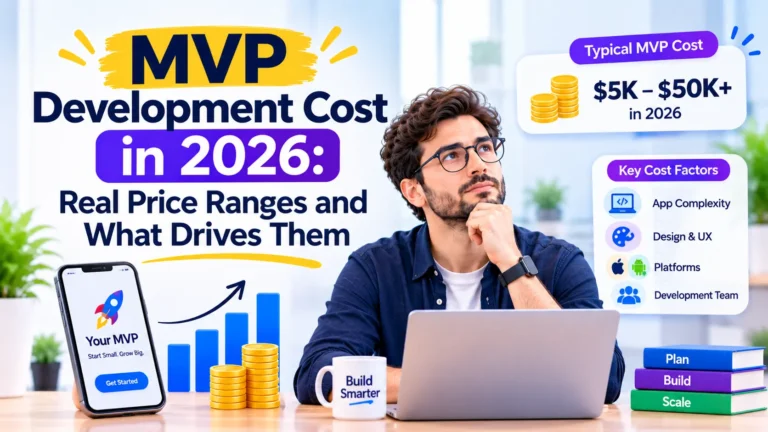
Cost depends on scope, design, integrations, platforms, security needs, and the team. As typical ranges, a clickable prototype often costs $2,000 to $8,000, a single-platform MVP $15,000 to $35,000, and an iOS and Android MVP built with Flutter $20,000 to $60,000. AI-heavy, regulated, or marketplace products usually cost more.
The lowest quote isn’t always the lowest total cost. Poor architecture and weak testing lead to expensive rework. Our guides on how to compare an app development quote and how long it takes to build an app help you plan budget and timeline realistically.
When Trends Don’t Matter
Here is the honest part. You don’t need every trend in your first version. Many successful MVPs use no AI at all, run on simple infrastructure, and win because they solve one painful problem well. Adopt a trend only when it makes your core user journey faster, cheaper, or more valuable.
Ready to Build Your MVP With the Right Approach?
At PWH Services, we help founders turn ideas and stuck prototypes into launched products. We start with scoping, recommend the leanest approach that fits your goals, and send an itemized fixed quote within 24 hours. You approve each milestone before you pay, and you own the code and every account from day one. If you’re comparing partners, our guide to choosing an MVP development company explains what to look for.
Frequently asked questions
AI-native products, agentic software development, smaller and more focused first releases, more capable low-code platforms, modular API-first architecture, and privacy built in from the start. Successful MVPs still depend on a clear customer problem and measurable validation.
No. AI makes sense when it clearly improves the product, such as automation, personalization, search, or classification. Adding AI without a customer benefit increases cost and complexity.
Yes, for simple workflows, portals, dashboards, and early demand tests. Products with complex logic, strict compliance, or highly customized experiences usually need custom development.
A focused MVP usually takes 8 to 16 weeks from scoping to launch. Simple prototypes are faster, and products with complex integrations or compliance needs take longer.
Look for relevant past work, a clear scoping process, itemized pricing with milestone payments, honest advice about what to cut, and full ownership of the code and accounts. Compare at least two or three proposals with the same written scope.

Written by the PWH Services team, who design and build mobile apps, websites and AI products for startups and growing businesses.